Start with a label you can understand, a bottle you can store correctly, and a retailer that can deliver to you.
Read the bottle before the tasting note
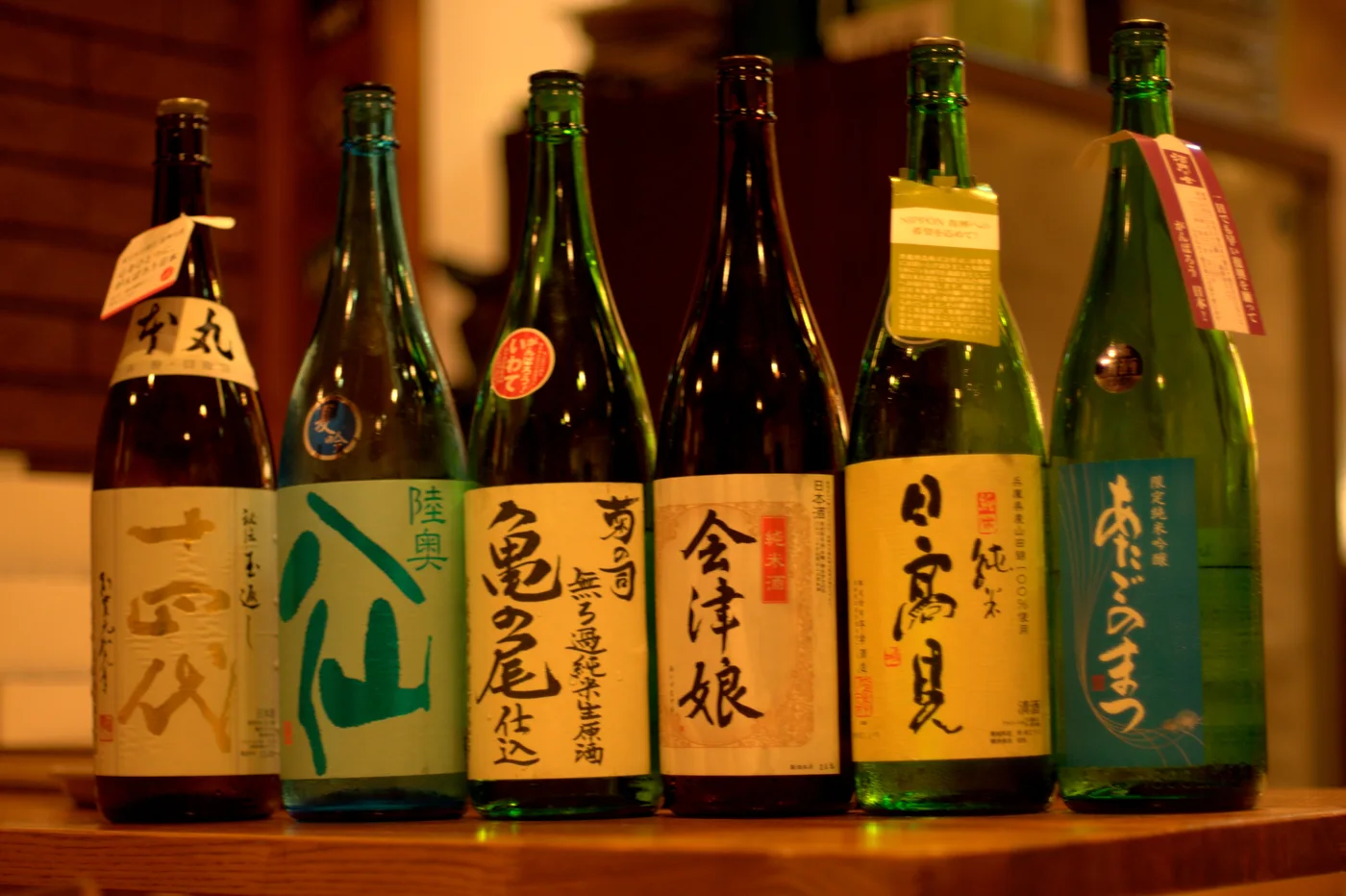
Compare the exact product name, brewing style, ABV and volume. A familiar brand can include several very different bottles. The photographed edition may differ from the current export edition.
Choose for your meal
Aroma, sweetness and richness are more useful questions than a single best-sake ranking. A delicate meal and a strongly seasoned meal call for different starting points.
Keep the first comparison simple
Compare two candidates with complete labels. Check the delivery cost and storage instructions before deciding. A small bottle can reduce the commitment, where that size is actually available.
BOTTLES & SAKE VESSELS
Reference photographs
External reference photograph
Japanese sake bottles photographed by koutalou. The different labels illustrate why the exact edition matters.
External reference photograph
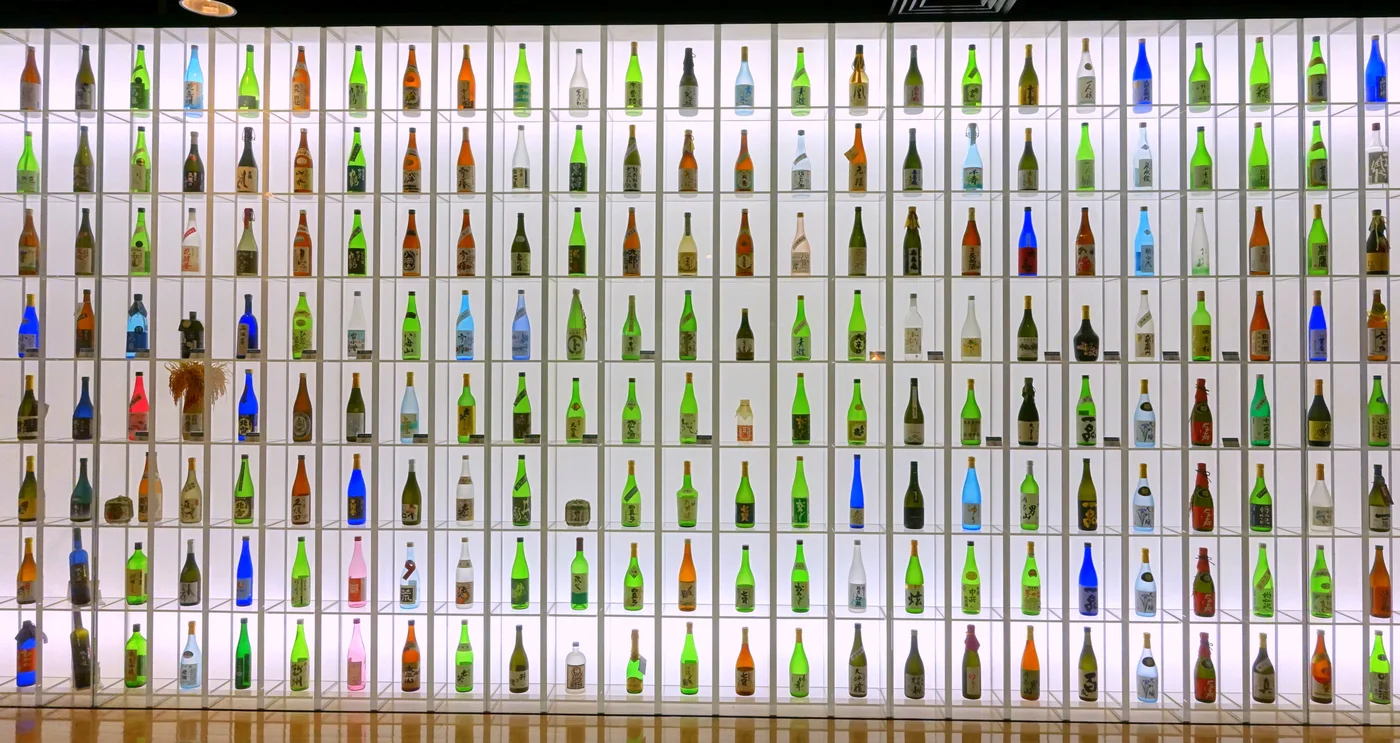
A sake-bottle display at the Food and Agriculture Museum in Setagaya, Tokyo, photographed in 2017.
Put the label first
Browse bottle photographs and keep two or three candidates in your comparison. Check the seller’s exact listing before purchasing.
These are candidates for reading labels, not tasted recommendations. Compare the exact style, volume and storage instructions on each detail page. Price, stock and delivery must be checked with the seller.
These links go to Amazon.co.jp. Check current price, stock, storage, shipping costs and delivery eligibility with the seller. Overseas alcohol delivery is not confirmed.
Choose by what you want to know
This is a general guide, not an individual tasting review. Verified affiliate links, when added, will be identified beside the link.
Reference photographs illustrate bottles and serving vessels. They are separate from the editor’s bottle archive and do not document an editor tasting, a current retail edition or availability. Image licenses checked 2026-10-06.